Sunday, January 29, 2012

Sacred Willow


Weather: Warm afternoons continue to dry the mud; when temperatures drop at night, the moisture hovers above and keeps morning temperatures in the middle to high 20's; last precipitation 2/17/12; 10:08 hours of daylight today.

What’s blooming: Black mustard coming into bloom along shoulders.

What’s still green: Juniper and other evergreens; stems on hybrid roses and young chamisa; leaves on grape hyacinth, alfilerillo, gypsum phacelia seedlings, snakeweed, anthemis, strap leaf aster; cheat grass.

What’s red: Cholla; branches on Russian olive, tamarix, sandbar willow, apples, apricots, spirea, wild roses and raspberry; leaves on coral bells, pinks, soapworts.

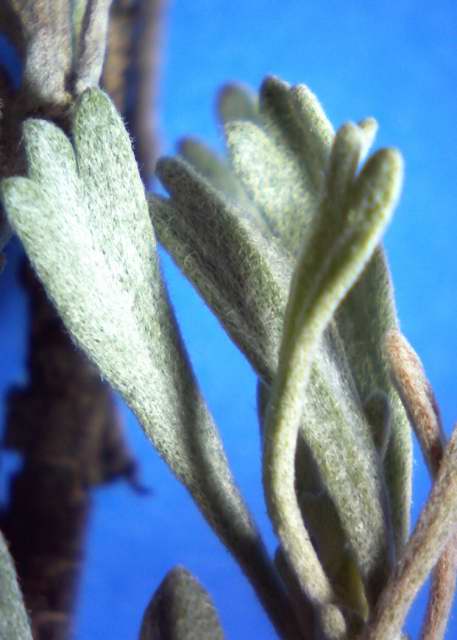
What’s blue or gray: Piñon; leaves on four-winged saltbush, snow-in-summer, stickleaf seedlings, beardtongues, golden hairy and purple asters.

What’s yellow-green/yellow-brown: Arborvitae; branches on weeping willow more intensely yellow.

What’s blooming inside: Aptenia, zonal geranium.

Animal sightings: Small birds.


Weekly update: The use of willow for sacred objects made to ensure a bountiful food supply goes back thousands of years, to the time when corn wasn’t yet an important part of the diet.

By then, the large mammals hunted with Clovis points around 9500 bc had come and gone with the peripheral environment of the last glaciers. The bison hunted with Folsom points around 8000 bc had moved on when the climate continued drying. The people who remained in the southwest adapted by following annual crops of seeds and berries and eating rabbits.

Then, about 2000 bc, the rains returned. Big horned sheep were in the area stretching from Grand Canyon west through the Mojave to what is now China Lake Naval Weapons Center at the base of the Sierra Nevada. A new technology, Gypsum points, developed and foragers perfected coiled basketry.

With the animals came hunting rituals whose artifacts were found at Newberry Cave southeast of Barstow on the Mojave river in the 1950's. They included quartz crystals with pigments and adhesives still attached, feathers wrapped in sinew, sheep dung wrapped in sinew and some petroglyphs.

Most important were small figures made by forming strands of willow into animal shapes then wrapping them with the same piece of willow. They found 11 in tact and fragments of another 1,000 that dated to 1500 bc.

Such figurines have been found in at least 15 sites in the lower Colorado basin and have occasionally been made with skunk bush or cottonwood. The earliest were found at Stanton’s Cave in the Grand Canyon from 2000 bc where they were associated with deer. They persisted in the Canyon Lands at the confluence of the Green and Colorado rivers where they evolved into social totems.


The petroglyph tradition persisted for another two thousand years in the nearby Coso Mountains. There drawings etched in volcanic rock show big horn sheep and animal-man figures. David Whitley argues the ones made a thousand years ago were done by Shoshoni shamans who traveled miles to seek contact with spirits of big horn who controlled rain. The details of the drawings came from their trances.

Alan Garfinkle suggests the ones made three thousand years ago, those contemporary with the willow figures, often show leaping or running sheep without hunters or depict long lines of animals emerging from crevices in the rocks. He believes they were done in communal spring rituals by people who believed animal spirits reemerged annually from the underworld. The glyphs were attempts to ensure a large population of edible animals.

Garfinkle notes many were more practically located near ambush sites, suggesting a more direct link to hunting magic. There are something like 35,000 glyphs scattered over 90 square miles.

Hunting techniques from 3000 years ago are difficult to understand when only stone points survive and petroglyphs show only the most symbolic interactions between man and animal. In more recent times, men in Wyoming first drove sheep into traps. There’s evidence they also used juniper bark nets to snare animals who could then be killed.

If such techniques were used earlier, wrapping an animal figure in the willow from which it would be formed would be more than a representation of a fixed moment. It’s creation would be a symbolic dramatization of the hunt itself.

Unlike the Coso petroglyphs which exist in open areas, the split twig figurines tend to be found in caves, many inaccessible today. Their location in a pluvial period may have been different, but there’s little indication Newberry was entered for any reason other than rituals. There’s little evidence of stratigraphy and no signs of occupation.

The use of willow may have been pragmatic: it was available, it was used for nets, it was pliable enough to form the figures. If the association of sheep with rain predates the cultural complex described by Whitley, the use of willow to capture the spirit of the sheep may have been meant more in a society more dependent on plants than animals for food.


Notes: All dates are general approximations.

Coulam, Nancy J. and Alan R. Schroedl. “Late Archaic Totemism in the Greater American Southwest,” American Antiquity 69:41-62:2004.

Crockett, Stephanie. “The Prehistoric Peoples of Jackson Hole,” in John Daugherty, A Place Called Jackson Hole, 1999.

Davis, C. Alan, RE Taylor, Gerald A. Smith. “New Radiocarbon Determinations from Newberry Cave,” Journal of California and Great Basin Anthropology 3:144-147:1981.

Garfinkel, Alan P. “Paradigm Shifts, Rock Art Theory, and the Coso Sheep Cult of Eastern California,” North American Archaeologist 27:203-244:2006.

Whitley, David S. A Guide to Rock Art Sites: Southern California and Southern Nevada, 1996.

Wulbrecht, Sally. “The Mountain Shoshones: Sheep Eaters,” Wind River Historical Center website.

Photographs:
1. Sandbar willow on ditch banks near Española, 13 January 2012.

2. Sandbar willow on banks of Santa Cruz river just before it merges with the Rio Grande, 29 December 2011.

3. Globe willow, 30 January 2012, just acquiring its winter color.

4. Weeping willow growing down the road, 27 January 2012, with winter yellow branches.

Sunday, January 22, 2012

Willow Prayer Sticks


Weather: Some rain Tuesday, more muddy afternoons; 10:08 hours of daylight today.

What’s blooming: Black mustard coming into bloom along shoulders.

What’s still green: Juniper and other evergreens; stems on hybrid roses and young chamisa; leaves on grape hyacinth, alfilerillo, gypsum phacelia seedlings, snakeweed, anthemis, strap leaf aster; cheat grass.

Men have been pruning their apples this week.

What’s red: Cholla; branches on Russian olive, tamarix, sandbar willow, apples, apricots, spirea, wild roses and raspberry; leaves on coral bells, pinks, soapworts.

What’s blue or gray: Piñon; leaves on four-winged saltbush, snow-in-summer, stickleaf seedlings, beardtongues, golden hairy and purple asters.

What’s yellow-green/yellow-brown: Arborvitae, branches on weeping willow.

What’s blooming inside: Aptenia, zonal geranium, Christmas cactus. A twig of sandbar willow I stuck in water has put out some roots and a leaf is beginning to open.

Animal sightings: Small birds.

Weekly update: Rain this week washed away what snow remained, but judging from my muddy drive, the water hasn’t gone far.

What a difference a year makes. The monsoons of 2010 left little water. We got some snow the usual time, just before the solstice, but it soon disappeared, to be replaced by zero temperatures last January with no cover to insulate plants.

Some flurries fell the first week of February, followed by below zero temperatures and a gas outage that left us with no heat for a week. Then nothing until May when more snow fell that killed what apple blossoms had managed to survive. The cherries and apricots hadn’t much tried to bloom.

By June we knew we were in serious drought. In past years, the pueblos would have been sending messengers to the rain spirits at Tsikomó mountain four days after the summer solstice. But last year, the Pacheco Fire that began June 18 had put restrictions on forest use. Then the Las Conchas fire broke out June 26 and crossed the headwaters of Santa Clara Creek (P’opii Khanu) on its way past what the Forest Service called Mount Chicoma on June 29.


In a normal year at San Juan, Alfonso Ortiz says the agricultural cycle begins on January 20, a month after the solstice, when the chief of the Winter moiety initiates To Lessen the Cold. This ends when, on the fourth day, he formally asks the chief of the Summer people to “seek life for all.”

On February 20, the Summer chief initiates Bringing the Buds to Life. March 20 marks Bringing the Leaves to Life and April 20 begins Bringing the Blossoms to Life. This work is so important, it must be postponed for four days if someone dies while it’s in progress. As Ortiz notes, since people do die, the work often is not completed until the beginning of June.

If no rain has come by the end of the retreat for Bringing the Blossoms to Life, “all of the Made People go on a ‘rain retreat’ to the mountain and hill shrines west of the village.” He doesn’t detail what occurs, but only says the purpose is “to pray, meditate, and make offerings to the spirits of the shrines and earth navels.” While there, they also “gather plant medicines for use in other rituals.”

After the Las Conchas fire burned through the headwaters of the creek, the Santa Clara governor, Walter Dasheno, called a press conference to express his dismay. But, when he had to explain why the fire was so serious, he would only say it destroyed “cultural sites, forest resources, plants and animals that the people of Santa Clara depend upon for their livelihood and culture” and that “he and other pueblo members were continuing to pray.”

William Boone Douglass grew impatient with the silence of local people regarding Tsikomó, and entered the sacred space in 1911. As he climbed the 11,400' mountain he moved beyond the timber line. The sacred spring was about 50' below the crust, which was bare, except for a group of four piñon.

When Ortiz climbed the mountain with two others from San Juan in 1964, they noticed the number of trees killed by lightening and the greater level of precipitation. He took that and the constant presence of rain clouds as signs the spirits were unusually active there. The lower part of the mountain is the source for both Santa Clara Creek and Rio Oso.

At the top, Douglass found a stone mound in the center of the crest. To the south was a stone enclosure (Kwan-po) with seven exits on the east side. These are the openings for the rain roads (awu-mu-wa-ya) used by the Taos, San Juan, Santa Clara, San Ildefonso, Jemez, Cochiti and Navajo.

In the center was a saucer like depression. To its west was a polished blackware vase which had held water and corn meal offerings. Behind the vase were rows of prayer sticks planted in the earth.

Prayer stick is a confusing term, because while the sacred objects to which it refers are similar in form - a stick or pair of sticks, with feathers and plant matter attached by cotton cording - they are used in most of the pueblos for overlapping and sometimes differing purposes.

Ruth Bunzel found among the Zuñi, their most important associations were with the two solstices, and that winter solstice activity was related to the kachinas. At Isleta, Elsie Clews Parsons says prayer sticks were used during the summer solstice only, and that the Tewa speaking pueblos only used them in times of drought. She notes there they were made by all the chiefs and taken to the top of Tsikomó.

Douglass identified 14 different types of prayer sticks in the space shared by three Tewa speaking pueblos, a Tiwa speaking, a Towa speaking, and Keres speaking one, along with an Athabascan group. Most were made from willow, but other materials were used. Parsons says willow was used for rain or water spirits and oak or pine for the war cult.

The most important reason willow is used is that it only grows near water. Frank Cushing went so far as to suggest the Zuñi believed willow brought forth water. The Hopi call their prayer sticks paho, meaning water wood.

In a binary world sharply divided between two moieties where harmony and community are valued, the prayer sticks may also have acted as symbolic bridges between two discrete worlds. Sometimes, two sticks are bound together, representing male and female or, Douglass was told, older and younger brothers.

Among the Zuñi, the fact willow has separate male and female flowers seems important. Bunzel heard a poem used for offering prayer sticks at the winter solstice that included the lines:

    From all the wooded places
    Breaking off the young straight shoots
    Of the male willow, female willow

Another used at a monthly offering of prayer sticks was

    Male willow,
    Female willow,
    Four times cutting the straight young shoots

And, during the chief’s summer retreat to bring rain, she heard

    Male willow, female willow.
    Four times breaking off the straight young shoots.

The other important characteristic of willow is color.

Most prayer sticks found at Tsikomó were made from wood with “smooth reddish bark” and painted green or yellow. The attached plants were either ones with yellow flowers (goldenrod and snakeweed) or green sedges. Ortiz says the colors associated with the Summer people are black, yellow and green, while the one associated with the Winter is red.


The willow is almost always described as red, but Parsons says in one pueblo “one moiety uses red willow, the other yellow willow.” Often, the wood is painted with green or black paint, the one color representing life, the other the underworld.

What isn’t mentioned, but must be observed, is the colors of willow embody elements of both summer and winter in a single branch. In one season, it’s clothed in green leaves. In January, its bare stems are not dormant, but every day become a more vivid red.

Notes:
Baca, Joe. “Las Conchas Fire Burns More Than 6,000 acres of Santa Clara Pueblo Land – 6/30,” Santa Clara press release, 30 June 2011; words with potentially coded meanings are bolded.

Bunzel, Ruth L. Introduction to Zuñi Ceremonialism, 1932.

_____. Zuñi Ritual Poetry, 1932.

Cushing, Frank Hamilton. Zuni Breadstuff, 1920.

Douglass, William Boone. “Notes on the Shrines of the Tewa and Other Pueblo Indians of New Mexico,” International Congress of Americanists Proceedings 19:344-378:1915.

Los Alamos Monitor. “Santa Clara Pueblo Declares State of Emergency,” 30 June 2011; words with potentially coded meanings are bolded.

Ortiz, Alfonso. The Tewa World, 1969.

Parsons, Elise Clews. Pueblo Indian Religion, vol 1, 1939.


Photographs:1. Red willow near a public path that someone cut, 1/15/12.

2. Las Conchas fire from my back porch about 12 miles away, 7/4/11. I believe this is one of the canyons south of Tsikomó.

3. Goldenrod growing on a ditch bank, the water now frozen, 1/20/12. The local Solidago species doesn't bloom at the time of summer solstice, but everywhere I’ve seen it here it’s been growing near water.

4. Snakeweed in my drive, 1/21/12. Douglass identified the plant he found used as Gutierrezia eathania. I haven’t found any other reference to that name. The species that’s common here, Gutierrezia sarothrae, doesn't bloom at the time of summer solstice, but it retains some green leaves all winter.

Sunday, January 15, 2012

Modern Willow Baskets


Weather: Afternoon thawing continues, but morning temperatures have dropped again; last snow 12/22/11; 9:59 hours of daylight today.

What’s still green: Juniper and other evergreens; stems on roses and young chamisa; leaves on sea pink, coral beardtongue, gypsum phacelia seedlings, snakeweed, strap leaf aster; cheat grass; crust active.

What’s red: Cholla; branches on Russian olive, tamarix, sandbar willow, apples, apricots, spirea and raspberry; leaves on coral bells, pinks, small-leaved soapwort.

What’s blue or gray: Piñon; leaves on four-winged saltbush, snow-in-summer, stickleaf seedlings, golden hairy and purple asters.

What’s yellow-green/yellow-brown: Arborvitae, branches on weeping willow.

What’s blooming inside: Aptenia, asparagus fern, zonal geranium, Christmas cactus peaked.

Animal sightings: Small birds.


Weekly update: Genuine tradition isn’t frozen into a single set of rules. There are general patterns which anthropologists use to define cultural periods, but within those groupings there’s room for individual variation and innovation.

At Chevlon along the Little Colorado in the 1300's, basket makers covered some of their wares with thick coats of paint. In the early twentieth century, Mary Lois Kissell says the Papago and Pima were still decorating their baskets with red and blue mineral paints.

However, the craftsmen at Chevlon also dyed some materials to weave in patterns. When aniline dyes became available in the late nineteenth century, Hopi women were quick to experiment with them. Many returned to vegetable dyes, partly because collectors preferred them and partly because isolation made it difficult to purchase materials.

When Helga Teiwes was interviewing basket makers in the 1990's, she talked to Vera Pooyouma, then estimated to be 104 years old. She first learned chemical dyes, changed to vegetable ones, and had returned to chemicals because they were easier at her age. The slightly younger Eva Hoyungowa, born in 1912, learned to use vegetable dyes from her father’s sister. Dora Tawahongva, born in 1930, was using both commercial and vegetable dyes at the time, while many others used only chemicals. All lived in Oraibi, the most traditional village on the Third Mesa.

Among the plants Teiwes saw women use for red dye were Navajo Tea and Hopi Tea. The preference seemed to depend on which was more abundant, with the first used more often by coiled basket makers on the Second Mesa and the second by wicker workers in Oraibi. Otis Mason identified additional dyes made from prairie sunflower seeds for dark blue, introduced safflower for yellow, and kaolin clay for white. Myrtle Zuck Hough told him Hopi also used their cooking beans to produce a black dye.

Dye introduces a second skill into basket making and a separate material harvesting cycle. When making items for the tourist trade, where speed is more valued by the artisan than effect, color can be introduced by using different natural materials: against the natural white of dried yucca leaves, modern Papago, the Tohono O’odham, use fading but still green yucca, brownish red banana yucca roots, and black devil’s claw pods.


Similarly, local craftsmen use variations in willow to introduce color into their work. Steven Trujillo, who settled in San Juan, learned to interweave “light and darker colored reeds, the later being older and slightly discolored when he harvests them. When first done, the baskets are white and light tan, but with age, the darker reeds turn almost ebony, giving a frank contrast to the pure white reeds.”

Carol Naranjo, who learned from Joe Val Gutierrez of Santa Clara, keeps the bark on the willow she uses, but introduces designs with small strips of pealed, white branches. She makes sure all her pieces are as close to the same color as possible. Carlos Herrera of Cochiti uses willows of different ages, sometimes using the older, nearly purple ones in horizontal bands, sometimes randomly in the vertical posts.

Greater variations in design are produced in the ways they finish off their baskets. Instead of making a simple rim, contemporary willow workers, who use bands of four for their warp, fold them in great arches to tuck them back several uprights away. The overlapping bands create the illusion of an open weave.

Naranjo indicates there also are small differences in the way people gather their materials. She cuts her willow sometime between October and May when sap levels are low. The best color is found now, in January.

She lets the branches sit for a few days so more sap can drain, then uses the willow quickly, while it’s still flexible. She can finish a small basket in a day. A larger one can take two to three days and is stored under a towel in the bathtub between work sessions.

She says others weave their baskets immediately. However, she says when the wood dries, as it will, it shrinks and the weave can get a bit loose.

In the late nineteenth century, Mary Lois Kissell says the Papago cut the willow for their coiled baskets in the spring, when new growth was emerging, then removed the bark immediately. In the past they had used boiling water to loosen it first. When they made a basket, they then soaked their willow, a few splints at a time.


One thing that drives innovation within tradition is a desire to master something seen but unfamiliar. Allie Seletstewa taught herself how to bend the warp to start the sides of a deep wicker basket by “experimenting with wet sand, water, and steam.”

When Trujillo was first learning how to make baskets, he said he was “down by the river gettin’ willows. And then, a crazy thing go on. Suddenly it’s like I asleep and dreamin’. I was awake, I know that, but somehow I was asleep at the same time. And I heard this voice - real clear - says to me, “Keep goin’, son. Keep on goin’’.”

“So I go home and get right into makin’ them baskets. Pretty soon I got it real good. Them baskets turnin’ out alright now, and been makin’ lots of baskets every since.”

Notes: The current Latin name for Hopi tea is Thelesperma megapotamicum, Navajo tea is Thelesperma subnudum, prairie sunflower is Helianthus petiolaris, and safflower is Carthamus tinctorius. Banana yucca root is Yucca baccata. Devil’s claw is Proboscidea parviflora. Other plants identified in post below.

Fewkes, Jesse Walter. Two Summers' Work in Pueblo Ruins, 1904, on Chevlon.

Fleming, Tim. “The Basketmaker,” The New Mexican, 19 July 1984, on Trujillo.

Kissell, Mary Lois. Basketry of the Papago and Pima, 1916.

Mason, Otis Tufton. Indian Basketry, volume 2, 1905, on Chevlon and the Hopi.

Naranjo, Carol. Comments made 4 January 2012 at her Santa Clara home.

Teiwes, Helga. Hopi Basket Weaving, 1996.

Photographs:
Red willow wicker basket by Carol Naranjo; willow was collected near Our Lady of Guadalupe Abbey in Pecos.

Yucca and bear grass coiled basket by Rachel Pablu, Tohono O’odham.

Sunday, January 08, 2012

Traditional Willow Baskets


Weather: Days alternate between thawing afternoons and freezing nights; the snow that melts turns to ice which turns slick under water; last snow 12/22/11; 9:52 hours of daylight today.

Snow still covers west and north facing beds, and eastern beds in the shadow of the fence. Those facing south or east are exposed to the drying sun and wind, as are open areas in the bunch grass. Ice is in the drip lines at night.

What’s still green: Juniper and other evergreens; rose stems; leaves on cheese mallow, sea pink, coral beardtongue, gypsum phacelia, snakeweed; cheat grass.

Big jump in prices for seeds in one catalog. Some prices much higher for bare root trees in another. No one left selling perennial plants at affordable prices by mail order.

What’s red: Cholla; branches on sandbar willow, apples, apricots, spirea and raspberry; leaves on coral bells, pinks, small-leaved soapwort.

What’s blue or gray: Piñon; leaves on four-winged saltbush, snow-in-summer, golden hairy and purple asters.

What’s yellow-green/yellow-brown: Arborvitae, branches on weeping willow.

What’s blooming inside: Aptenia, asparagus fern, zonal geranium, Christmas cactus.

Animal sightings: Small birds.

Weekly update: Weaving techniques exist separately from their form or plant material, and thus have adapted when changing requirements demanded new utensils. In parts of the west where fish were important, one set of shapes developed. Netting and cordage appeared elsewhere when people became dependent on rabbits.

The forms we associate with baskets evolved with a reliance on plants for food. The dietary transition occurred when glaciers had receded and the remaining lakes were drying. Large mammals had died or were migrating. The lacustrine environment supported trees like sandbar willow and sedges like tule.

The earliest burden baskets were made by weaving tule stems twisted into strands between fibers extracted from Indian hemp stalks. At Danger Cave in Utah in the 7000's bc, twined baskets were found with pickleweed chaff. The technology and form also appeared at Falcon Hill, Spirit Cave, and Hidden Cave in the same millenium in Nevada.

Within a thousand years, coiled baskets appeared that used willow as a weft, but eliminated the vertical posts that would have introduced spaces and rippled walls. The rows were held together by lashing them with strands of yucca.


A coiled basket has been found in Cowboy Cave in Utah from sometime in the early 6000's bc. Another made from sandbar willow was found in Hogup Cave, also in Utah, that dates to the late 5000's bc. Anthropologists think the technique developed a century or so earlier in Coahuila and moved north.

The use of yucca suggests a steadily drying environment. David Rhode and David Madsen found that while limber pine nuts existed in the strata from the 5000's bc in Danger Cave, the more arid piñon replaced them in the next higher layer, as they replaced them in the environment. They note that neither tree grew in the immediate vicinity of the cave, so the nuts found there had to have been gathered and transported.

With time people found ways to strengthen their baskets and compensate for variations in willow. They used two branches laid side by side or two with a split piece above. If a twig was too big, they dressed it down. If wood was too small, they padded with grass. They daubed the insides with mud to hold cooking water heated by hot stones. They caulked them inside and out with piñon gum to carry water.

When pottery was perfected after AD 500, it assumed many functions served by baskets. Then conditions dried even more, and places like Chaco Canyon were abandoned around 1200 for river plains.

Basket makers continued to work in the 500 room Chevlon on the Little Colorado in northeastern Arizona in the 1300's, but they substituted drought tolerant rubber rabbitbrush for willow. Walter Fewkes found the fragment of one wicker basket with small construction details identical to those used at Oraibi on the Hopi Third Mesa in the late nineteenth century.

Wicker work had been around for some time - Chevlon graves were lined with wicker matting. This apparently was simply an application of a familiar technique to a familiar, but different form.

The Spanish introduced new storage devices, like iron cooking pots, which altered usage patterns for both baskets and pottery, but they also introduced new foods with new handling requirements.

James Stevenson found an 8" high, globular wickerwork basket at Zuñi in the 1880's used to gather peaches. It was made from rubber rabbitbrush with a yucca rim. There were visible gaps between the rows and the walls were deeply corrugated by the stiffness of the composite. It was dismissed as crude, but fruit only needs a strong container, not a sealed or smooth walled one.

Many of the remaining basket functions disappeared when mass produced containers filtered west in the nineteenth century. Helga Teiwes says coiled basketry began to disappear among the Hopi around 1750, and willow was no longer used for the foundation after 1820. They once used skunkbush for their wickerwork, but now use dune broom for the warp and rabbitbrush for the weft.

By the 1880's, Stevenson’s wife Matilda noticed the Zuñi bought their baskets, preferably from the Apache, then from the Hopi. By 1916, Smithsonian researchers among the local Tewa speakers mentioned no local tradition, only used the past tense for the Hopi and Zuñi.

Basket making didn’t die out completely. Mary Lois Kissell heard the Papago continued to carry water baskets in the 1890's when they took their horses on long journeys. Steven Trujillo, who was born about 1899 and settled in San Juan, had an uncle who made baskets. Carol Naranjo, now in her 70's, remembers her grandmother had willow baskets hanging on the walls of her home in Old Laguna and always stored her freshly baked bread in a red willow basket.


Driven from the kitchen and store room, basket making, both coiled and wicker, survived for ceremonial uses. Basket dances existed in many pueblos. The Hopi used small plaques as symbolic emblems of kinship and community. Zuñi women avidly collected the finer pieces.

The trains that brought cheaper, more efficient containers also brought souvenir-seeking tourists. By 1915, the Papago were making coiled baskets for the curio trade. They no longer used willow for the coils; it was too valuable to waste on ephemera. Instead, they used bear grass. The Pima adopted cat tails. The Hopi were already using galleta grass.

They all still used sun bleached, dried yucca leaves. However, at White Dog Cave in Arizona, where early corn and primitive pottery were found from sometime between 480 and 175 bc, the finest baskets had eight coils to an inch with twelve yucca stitches per inch. Most were five coils to an inch and nine to eleven stitches. The coiled plaque I bought this week, made by Rachel Pablu, uses three coils to an inch with five stitches.

Tourists who drove between Santa Fé and Taos expected collectible pottery, not baskets, and so pottery making was revived for them. When Steven Trujillo wanted to learn basket making in the early 1950's in San Juan he could find no teachers. His uncle was dead; his aunts knew nothing.

Trujillo passed on his wicker ware skills to Joe Val Gutierrez of Santa Clara, who taught Naranjo, who has since taught others. While she’s sold her share, she’s also given her baskets to people in the pueblo. General weaving techniques may not have changed for thousands of years, but hers now serve a new function, providing continuity with those past generations.


Notes: The current Latin name for pickleweed is Allenrolfea occidentalis. Tule is Schoenoplectus acutus and Indian hemp is Apocynum cannabinum. Limber pine is Pinus flexilis while piñon is Pinus monophylla. Rubber rabbitbrush is a subspecies of Ericameria nauseosa, skunkbush is Rhus trilobata, and dunebroom Parryella filifolia. Bear grass is Nolina microcarpa , the Pima cat tails are Thypha latifolia, and the Hopi galleta is Pleuraphis jamesii. The yucca leaf is usually from Yucca elata. Sandbar willow is Salix exigua, but the Zuñi used Salix irrotata, the Pima Salix nigra, and the Hopi Salix laseolepis.

Fleming, Tim. “The Basketmaker,” The New Mexican, 19 July 1984, on Trujillo.

Fewkes, Jesse Walter. Two Summers' Work in Pueblo Ruins, 1904, on Chevlon.

Guernsey, Samuel James and Alfred Vincent Kidder. Basket-maker Caves of Northeastern Arizona, Report on the Explorations, 1916-17, 1921, on White Dog cave.

Kissell, Mary Lois. Basketry of the Papago and Pima, 1916.

Mahoney, Jane. “Winding willow,” The Albuquerque Journal, 18 April 2004, on Naranjo.

Mason, Otis Tufton. Indian Basketry, volume 2, 1905, describes baskets collected by Fewkes and James Stevenson.

Rhode, David and David B. Madsen. “Pine Nut Use in the Early Holocene and Beyond: The Danger Cave Archaeobotanical Record,” Journal of Archaeological Science 25:1199-1210:1998.

Robbins, William Wilfred, John Peabody Harrington and Barbara Friere-Marreco, Ethnobotany of the Tewa Indians, 1916.

Stevenson, Martha Coxe. The Zuni Indians, 1904, reprinted by The Rio Grande Press, Inc., 1985.

Teiwes, Helga. Hopi Basket Weaving, 1996, on Mexican history of coiled baskets.

Photographs:
1. Sandbar willow with some remaining catkins growing along the Rio Grande in Española, 29 December 2011.

2. Coiled basket made by Rachel Pablu, Tohono O’odham; the detail showing the stitching technique and grass is from a joint on the back, not the front.

3. Red willow wicker basket made by Carol Naranjo.

4. Sandbar willow with some persisting leaves, 29 December 2011.

Sunday, January 01, 2012

Sandbar Willow


Weather: Snow has slowly been disappearing on warm afternoons, but persists in northern and western shadows; last snow 12/22/11; 9:47 hours of daylight today.

What’s still green: Juniper and other evergreens; rose stems; leaves on hollyhock, cheese mallow, vinca, sea pink, coral beardtongue, gypsum phacelia, snakeweed, strap-leaf aster; cheat grass.

What’s red: Cholla; branches on sandbar willow, apples, apricots, spirea and raspberry; leaves on coral bells, pinks, small-leaved soapwort.

What’s blue or gray: Piñon; leaves on four-winged saltbush, snow-in-summer, pinks, golden hairy and purple asters.

What’s yellow-green/yellow-brown: Arborvitae, branches on weeping willow.

What’s blooming inside: Aptenia, asparagus fern, zonal geranium, Christmas cactus.

Animal sightings: Small birds.


Weekly update: There should be a guide book called New Mexico at 70 Miles an Hour. In the modern world of expressways and fences, there simply are things one can never see up close.

For years I’ve driven by a patch of brilliant red stems that stretch south from the Griego Bridge in Española interweaving different hued swaths that looked, from a distance, like they’re growing on a sandbar separated from the left bank by a narrow rivulet. By May they’re covered in green, quite indistinguishable from whatever else grows down there.


A couple weeks ago, when I was driving toward Taos, I saw something similar growing between the road and the river. It was early Sunday morning, so I could pull onto a shoulder broadened for customers to a winery that would have been busy at that hour in summer. Traffic was light enough to cross the road safely. The skiers were already on the slopes. The horn maddened drivers weren’t out yet.

As soon as I touched the thin, round branches I knew they were willow. It may have been decades since I’d touched a willow, but there’s something about the pliability and surface the fingers remember.

That’s when I wanted the guidebook that would answer the question - what is the short willow that grows along the Rio Grande with brilliant red stems in winter. Instead, Elmer Wooton and Paul Standley let me know twenty Salix species grow in New Mexico. Two are described as “common shrubby,” one more as “common,” one more as “shrubby,” and two as black. None are red.

The Tewa speakers of Hano knew better. They told Barbara Friere-Marreco another shrub was “like the ordinary willow, jay, but the bark is green, not red.”

Three of Wooton and Standley’s willows occur in the lower Sonoran Piñon-Jupiter belt, but only one, sandbar willow, is found in this part of the state. However, their identification key was no help in winter for a deciduous tree:

- Leaves several times as long as broad, linear to elongate-lanceolate or oblong-lanceolate; capsules glabrous (or weakly villous).
- Scales pale yellow, deciduous
- Stamens 2, hairy below; leaves more or less canescent, linear, remotely denticulate, or sometimes entire; capsules more or less hairy.
- Capsules 5 to 7mm. long, glabrate; leaves 5 to10 cm long.
- Leaves canescent, entire, or sometimes denticulate; capsules smaller, 5mm long, on a short pedicel or sessile.
- Capsules sessile.

Their comment that “Indians and Mexicans use the stripped branches in basketry” was more helpful only because it suggested something about tensile traits I already suspected.


When I went on line to confirm the local plant was Salix exigua, I found others who were more interested in distinguishing different types of willows than with identifying the one that was too common to notice. I appreciated their detailed photographs because they showed me things I’ll never see in person. But, they didn’t make me any more confident I know what’s happening on the river.

The short trees must once have been more accessible. Local Tewa speakers told John Harrington they recognized the flowers existed in catkins. They had separate terms for the willow grains (buds) and the ensuing loose down of a bird (the detached fluff). They even had a separate term for the male flowers.

Similarly, Spanish speakers knew the plant, called it jarita. They told Leonora Curtin they chewed the leaves when their gums became infected. Perhaps ruefully, Rubén Cobos recalled jara de la hoja redonda was “used for whipping mischievous children.”

Neither Harrington nor his botanist, Wilfred Robbins, bothered to find out what species they were discussing. They simply associated the Tewa words with the two shrubs Wooton and Standley called “common shrubby,” one of which had been described as growing in the transition zone near Pecos. Curtin seemed to think jarita and jara de la hoja redonda were different varieties, while Cobos was sure his was sandbar willow.

Assuming the local tree is Salix exigua, I wonder why something described as common should be so difficult to find in an accessible location.

Part of the reason may be the species can be heavily browsed by domestic stock which once would have been kept near the homesteads in the village which edges the river. At least three shaggy head of cattle are in a clover field near the river in the village right now.

Once eaten, willow can resprout from its roots. Single plants spread into dense copses of erect, thin, young branches, each with a fine netting of twigs. The shrubs I see in the river may all be one plant. However, its ability to regenerate after heavy grazing, especially in the fall is limited, especially if the ground is trampled at the time.

If it once grew heavily along both sides of the river south of town, it may be have been exterminated on the populated side, leaving it on remote islets and distant shores. For once gone, it doesn’t often reappear from wind blown or water carried seeds. The seeds have no dormancy. They must settle on wet land within a week and usually germinate within 24 hours. Then they have to survive the first season near a river swollen by monsoons.


Basket makers don’t care about the scientific name - they call it red willow or Rio Grande willow or river willow. They’re more interested in a subgroup of the trees, those with uniformly-sized branches. Many of those growing near Española have young branches that are still too short or too thin for baskets. The growth at the top of the taller trees tends to be curly, rather than straight.
Inaccessibility has been a problem for Carol Naranjo, a basketmaker who recently moved to Santa Clara. She gathers her reeds in winter when the trees are dormant. The desirable ones tend to be on private land protected by dogs or on federal land protected by prohibitions against cutting.

The late Steven Trujillo had fewer problems because he could find reeds “all the same size” along the banks of the river within San Juan pueblo where he lived. His problem was vandalism: a group of boys deliberately burned the willows in the area where he collected his raw material.

Actually, if you want to get to something badly enough you can. This week I discovered people had cut the fence on far side of the river so I could get down to it. On the other side I watched a man who had found a place to park his car so he could walk his dog. The next morning, I followed his example and discovered the view is better standing on the bridge.


Notes:
Anderson, Michelle. “Salix exigua,” 2002, United States Forest Service, Fire Effects Information System.

Cobos, Rubén. A Dictionary of New Mexico and Southern Colorado Spanish, 1983.

Curtin, L. S. M. Healing Herbs of the Upper Rio Grande, 1947, republished 1997, with revisions by Michael Moore.

Fleming, Tim. “The Basketmaker,” The New Mexican, 19 July 1984, on Trujillo.

Robbins, William Wilfred, John Peabody Harrington, and Barbara Friere-Marreco. Ethnobotany of the Tewa Indians, 1916.

Southwest Art. “A Basket Maker Pursues a Dying Art Form ,” 1 July 2002, on Naranjo.

Wooton, Elmer O. and Paul C. Standley. Flora of New Mexico, 1915, reprinted by J. Cramer, 1972.

Photographs:1. Red sandbar willow, cat tails and cottonwoods from opposite bank, 28 December 2011.

2. Red sandbar willow from the bridge, 28 December 2011.

3. Sandbar willow on the point with other grasses and trees of fall from the bridge, 28 October 2011.

4. Red sandbar willow with bits of snow from the bridge, 28 December 2011.

5. Red sandbar willow from the bridge, 28 December 2011.

6. Red sandbar willow behind cattails from below the bridge, 29 December 2011.

Sunday, December 25, 2011

Gray Shrubs


Weather: Snow early Monday and again Thursday; warm afternoons defrost top of ground into slippery layer over frozen base that refreezes and heaves at night; 9:43 hours of daylight today.

What’s still green: Juniper and other evergreens, rose stems, hollyhock, winecup, cheese mallow, vinca, sea pink, coral beardtongue, gypsum phacelia, snakeweed, strap-leaf aster, cheat grass.

What’s red:
Cholla; branches on coyote willow, apples, apricots, spirea and raspberry; leaves on red hot poker, coral bells, small-leafed soapwort, pink evening primrose.

What’s blue or gray: Piñon; leaves on four-winged saltbush, snow-in-summer, pinks, yellow alyssum, golden hairy and purple asters.

What’s yellow-green/yellow-brown: Arborvitae, branches on weeping willow.

What’s blooming inside: Aptenia, asparagus fern, zonal geranium, Christmas cactus.

Animal sightings: Small birds, rabbit tracks.

Weekly update: Blame it on Zane Grey.

If James Fenimore Cooper defined the near west where Indians moved through primeval forests, Grey created our image of the far west where men ride horses through fields of sage.


When people see the gray shrubs growing along my drive, they compliment me on my sagebrush. When I demur, they give me that look the cognoscenti reserve for the feeble minded.

The logic is inexorable:
Sagebrush dominates many parts of the far west.
Sagebrush is gray.
These shrubs are gray.
This is the west.
Ergo, these shrubs are sagebrush.

There is no room for winterfat in such a world.

Last week I took a reality check. I drove up route 68 towards Taos through volcanic boulders and uplifted rocks. When you reach the top, a broad plateau opens, covered with sagebrush as far as you can see.


On the way back, I looked for the boundary between winterfat and sagebrush. It’s somewhere around Rinconada.

Above that point, sagebrush grows on volcanic rises on the western side of the river, and in crevices to the east. Between there and the Dixon turnoff, you see a few patches of winterfat. Below that point, it’s mainly chamisa and salt bush. Between Velarde and Española cholla grows with grasses on the eastern open land.


You don’t see much winterfat again until you take route 30 toward Los Alamos and pass through unsettled land between Santa Clara and San Ildefonso. The reason is probably quite simple. Unlike sagebrush, winterfat is quite palatable and doesn’t recover when overgrazed by sheep.

The two shrubs aren’t easy to tell apart at 60 miles an hour. If you stop, sagebrush has three-toothed leaves that persist into this season. Winterfat has long narrow leaves that first turned pink and now are tan, if they haven’t fallen completely. In their place are small, partly opened clusters of next year’s leaves. Both get their color from white hairs.

If you make the mistake of walking too close to either, your clothes get covered with debris that’s difficult to pick off. Sagebrush fragments smell; winterfat’s don’t.


If you happen to drive by either when they’re blooming, you can recognize the sagebrush by its yellow aura. Winterfat flowers are nearly invisible. What you see is light reflected through the fluffy white seed tails.

Artemisia tridentata is a composite with perfect flowers. Eurotia lanata is a chenopod with separate male and female florets.


This time of year, what distinguishes them from a distance are the floral remains. The receptacles of sagebrush are dirty brown in narrow plumes, while the male flowers of winterfat are titanium bumps on bare stems. The larger, redder brown heads you see along the road belong to salt bush. The lighter, more golden ones are chamisa.

If the bracts of sagebrush have fallen off, then its bare stems look no different than the tips of winterfat where the seedless male flowers are concentrated.


Sometimes though you can distinguish them by their habit. As winterfat ages, it sends new stems with shaving brush tops which force the existing stems to spread. Sage, at least the tridentata subspecies, has a main stalk and manages to stay erect, even when decrepit.


I suppose it’s soil that determines which you see. In this area, winterfat grows on recent Quaternary alluvial soils near the river, while the few sagebrush plants I’ve seen were near older, Tertiary badlands. On the road between Rinconada and Taos, the shrubs grow in disintegrating lava fields. The first tend to be finer grained than the second.

In the end, you may only know one from the other by remembering where you are, a local version of “If this is Tuesday, it must be Brussels.” However, if you really must visit the world defined by Zane Grey, there’s a small plateau in the climb north where sagebrush fills a narrow ledge and horses are available to rent. Sniff your pant legs when you leave.


Photographs:
1. Gray shrub and grassland on route 84 north of Abiquiú dam. I didn’t get out to look. It has a single stem but no sign of flowers on 3 September 2011.

2. Winterfat volunteers along my drive, 15 June 2011.


3. Sagebrush, tridentata subspecies, on Taos plateau with river gorge in middle distance, and sagebrush beyond, 11 December 2011.

4. Winterfat along the road north of the Dixon exit on route 68, 11 December 2011.

5. Pinkened winterfat leaves with white seed tails, from a shrub in my drive, 6 December 2011.

6. Sagebrush flower receptacle from Taos plateau, 11 December 2011.

7. Left, sagebrush stem tip with remains of flower receptacles from Taos plateau; right, winterfat stem tip with remains of male flowers and new leaf buds from Embudo valley, 11 December 2011.


8. Winterfat sprawling on Santa Clara land, route 30, 11 December 2011.

9. Erect, but dead sagebrush and shrubs with tan receptacles north of Pilar on route 68; light headed chamisa in the center and more sagebrush and juniper on the back ledge, 11 December 2011.

10. New winterfat leaf cluster with last season’s leaves, from my drive, 6 December 2011.

11. Sagebrush leaves, tridentata subspecies, from somewhere along route 68, 11 December 2011.

Sunday, December 18, 2011

Sagebrush


Weather: Monday’s snow landed on the snow still here from a week ago; Tuesday’s rain didn’t wash everything away; temperatures have been too cold since to melt much; 9:43 hours of daylight today.

What’s still green: Juniper and other evergreens, rose stems, hollyhock, winecup, vinca, sea pink, coral beardtongue, gypsum phacelia, snakeweed, strap-leaf aster leaves.

Still green plants, like gypsum phacelia, seem to peak through snow first, perhaps because they generate heat from below that adds to effects of the sun above.

What’s red/turning red: Cholla; branches on coyote willow, apples, apricots, spirea and raspberry; leaves on red hot poker, coral bells, small-leaved soapwort, pink evening primrose.

What’s blue or gray: Piñon; leaves on four-winged saltbush, snow-in-summer, pinks, yellow alyssum, golden hairy and purple asters.

What’s yellow-green: Branches on weeping willow; arborvitae beginning to bronze.

What’s blooming inside: Aptenia, asparagus fern, zonal geranium; buds on Christmas cactus.

Animal sightings: Small birds.

Weekly update: The day before Thanksgiving, I wandered out toward one of the badland formations for a closer look at junipers I’d seen for years from my back porch. I found them growing in an allée bordering a wide stretch of ground bared by flowing water.

Having gotten that far, I thought why not start up the water path towards the sedimentary cliffs themselves. Bunch grasses were dark and dormant, but Gypsum phacelia was green everywhere.


Then I saw something I’d never seen before in this area, a very low sagebrush. Soon after, the alkaline loving phacelia disappeared, and more sagebrushes sprawled about, exploiting, if not directing, the movement of water.

These plants had the shorter, wider three-lobed leaves and branching habit of the wyomingensis subspecies of Artemisia tridentata found in this state in Rio Arriba and Taos counties.

The other big sagebrush subspecies, tridentata, with longer, narrower three-toothed leaves and a central trunk, is also found in Rio Arriba and Taos counties, but also in San Juan county to the west. It doesn’t grow in Santa Fe or Los Alamos counties, but in Sandoval and McKinley to the west. It isn’t around Albuquerque, but in Valencia and Torrance counties to the south.

While I associate sagebrushes with the Taos plateau, Frederic Clements warns their dominance is recent, the likely consequence of overgrazing the original grasslands in the late nineteenth century.

Like the badlands, where remains of ancient horses and camels have been found, the Artemisia genus appeared sometime in the Miocene when grasses were emerging. Clements believes the two have had an antiphonal relationship since, with grasses appearing in wet periods and sagebrushes dominating when the climate dried.

In historic times, he thinks the range of sagebrush was limited to desert areas where its roots penetrated deeper than those of the more common grasses. Most of the native groups who used the plant, mainly for medicine, live in the dryer northwestern part of the state, the Hopi, Zuñi, Navajo and Apache.

Tewa speakers used the dark woody branches as fuel when nothing better was available, say “on the journey from San Juan to Taos.” They used the leaves, which they could have brought back, to treat indigestion, flatulence, coughs and congestion.


The gray leaves have a bitter taste which discourages many animals from eating them, except during famine times. The nitrogen containing monoterpene oils that make them medicinally useful attack the digesting bacteria in animals’ stomachs. When sheep or cattle were abusing a stand of grass, sagebrush had a competitive advantage.

About the only wild animal who can digest the composite is the pronghorn, whose ancestors emerged in the post-Miocene when “the lower valleys appear to have been primarily clothed in spruce parklands, marshy meadows, or sagebrush (Artemisia) steppe with subalpine conifers and shrubs dominating the coarser sites.” The modern animal evolved when tree and grass savannas were alternating with shrub steppes during the warm periods between glacial advances.

William Dick-Peddie suggests the mechanics of domination are those of erosion. When grasses are eaten to stubs, water flows over the land, rather than into it. Juniper sprouts in depressions where water collects, while sagebrush nestles in the slightly elevated spots between.


I have no idea from whence came the seeds of the shrubs I saw or if they had taking advantage of the past season’s drought. Seed can last at least nine years under the right conditions, but it first has to be in the area. I haven’t ventured past the cliffs yet to see what grows beyond, so I don’t know if there’s some indigenous source or if the tiny brown seeds were tracked in by hikers or ATV tires.

I waited twenty years to visit the junipers and badlands. No matter how intense my curiosity now, I have no choice but to wait until the snow clears enough so I can see where I’m walking.

Notes:Brown, David E. “An Evolutionary History of Pronghorn Habitat and Its Effect on Taxonomic Differentiation,” Pronghorn Workshop, 2006.

Clements, Frederic E. Dynamics of Vegetation, collected papers edited by B. W. Allred and Edith S. Clements, 1949.

Dick-Peddie, William A. New Mexico Vegetation, 1993.

Moerman, Dan. Native American Ethnobotany, 1998, summarizes data from a number of ethnographies.

Robbins, William Wilfred, John Peabody Harrington, and Barbara Friere-Marreco. Ethnobotany of the Tewa Indians, 1916.

Tilley, Derek J., Dan Ogle, Loren St. John, and Brock Benson. “Big Sagebrush,” USDA Natural Resources Conservation Service plant guide.

United States Department of Agriculture, Natural Resources Conservation Service. New Mexico county distribution maps for Artemisia tridentata subspecies.

Photographs: All were taken near the local badlands, 23 November 2011. Gypsum phacelia in lower left hand corner of second picture.

Sunday, December 11, 2011

Four-Winged Saltbush


Weather: Three inches of snow fell Monday with zero morning temperatures Tuesday.

Thursday snow from the south-facing roof melted, then froze again when it landed on the rose leaves below.

Afternoon temperatures didn’t rise above freezing until Friday. Snow stayed on ground where it could sink rather than rise with evaporative melting. The snow also insulated plants from the cold night temperatures. The only places bare yesterday afternoon were south facing ones where it’s always been difficult to get perennials or shrubs to grow.

9:49 hours of daylight today.

What’s still green: Juniper, arborvitae and other evergreens, hollyhock, winecup, vinca, coral beardtongue, clover; new leaf buds visible on Bradford pear.

What’s red/turning red: Cholla; young branches of tamarix, apples and raspberry; leaves on roses, red hot poker, coral bells, pink evening primrose; raspberries and privet dropped leaves.

What’s blue or grey: Piñon; leaves on four-winged saltbush, snow-in-summer, pinks, yellow alyssum, winterfat, golden hairy and purple asters; remaining leaves fell on snow from my neighbor’s Russian olive.

What’s yellow-green: Branches on weeping willow.

What’s blooming inside: Aptenia, asparagus fern, zonal geranium; buds on Christmas cactus.

Animal sightings: Small birds in the shrubs; geese were flying south along the river Monday; rabbits were out in the snow Tuesday in the far arroyo.


Weekly update: Four-winged saltbushes grow nearly everywhere in the arid west from central México, where they evolved, up into Alberta. In the immediate area, they don’t grow on the prairies where they would compete with bunch grasses, but instead prefer disturbed, moister lands near arroyos and wash outs.

I don’t know if this is a consequence of sheep eating the shrubs into extinction, so only relic stands remain, or if they never were particularly plentiful in this area. The closest native group to recognize them in historic times was the Jemez, who used the grey leaves to treat ant bites and revive the faint. Farther south the Isleta used the dark wood for poisonous arrowheads.

The shrub’s primary New Mexico homeland, juniper savannah, is found along feeders to the Rio Grande, including the Rio Puerco from the west. Otherwise, William Dick-Peddie suggests the shrub grows where deep sand and water coexist, like areas along the Rio Chama north of Española, the shoulders of the Rio Grande south of Albuquerque where the Isleta live, and the Great Basin desert scrub lands of the Rio San Juan in the northwest.

Before ranchers arrived, rabbits were probably the principal feeders on Atriplex canescens. They also use the shrubs for shelter and water. The Zuñi, who held ceremonial rabbit hunts, tied prayer plumes to the twigs during winter solstice ceremonies to ensure the animals would be available in large numbers.

House finches lived in my bushes this summer after they abandoned their attempts to live on the porch rafters. In other parts of the country quail, grouse and gray partridges eat the fruits, while pheasant nest under shrubs that provide shelter from winter.

Ranchers soon learned the chenopod’s protein, fat and carbohydrate levels match those of alfalfa for sheep, especially in winter when the leaves are high in carotene and other vegetation sparse. There’s enough evidence that in this immediate area someone ran sheep, because overgrazed sections haven’t recovered.


Not only are there large sections of winterfat uphill from my house and on the river side of the ranch road, but there’s a section of winterfat as you continue down that dirt road toward the ranch. Beyond the fence, pueblo land is still grass and juniper. Salt bushes grow along the boundary, some with rust-colored heads, others simple humps of loden.

You see single saltbushes along the road near the village and can spot scattered ones back a bit, here and there. However, the species has both male and female plants. There must be enough of each sex within wind reach of each other for a copse to develop. Males seem to be more common than females.

The largest stand is in a wash that lies on the other side of a road from land used by the rancher. Until the neighbor’s dogs chased them out, that’s where rabbits lived. The cottontails moved under the sheds and debris in my uphill neighbor’s fenced yard from whence they venture into the wash when the dogs are confined.


The other place the shrubs grow in large numbers is along the top of the far arroyo bank where any animal that tried to eat them would probably plunge to its death when its weight collapsed the bank under it.


The saltbush, at least for a while, would survive with its roots exposed. Indeed, one this summer that lost its footings in the August flood, put out new leaves along the bare root by the end of October.


I often wonder how anything can survive such marginal environments. The shrub itself lets rain or snow through its dense, crisscrossing branches, then hides it from the sun. The snow makes obvious that seeds take root where there’s enough hidden water to support them.


Life on the ridges remains precarious. Nothing can live forever with compromised roots. Sooner or later more of the bank erodes and skeletons, dead and alive, tumble to the arroyo floor.


But, more than dead branches fall. Seeds drift down, take root and grow quickly. A colony has developed at the south end of the far arroyo’s steep bank which is where the rabbits have been heading since Monday’s snow.


Notes: The roots and soil preferences of four winged saltbush were discussed in the entry for 11 February 2007.

Dick-Peddie, William A. New Mexico Vegetation, 1993.

Howard, Janet L. “Atriplex canescens,” 2003, in United States Forest Service, Fire Effects Information System.

Moerman, Dan. Native American Ethnobotany, 1998, summarizes data from a number of ethnographies, including Sarah Louise Cook, The Ethnobotany of Jemez Indians, 1930, and Volney H. Jones, The Ethnobotany of the Isleta Indians, 1931.

Stevenson, Matilda Coxe. Ethnobotany of the Zuni Indians, 1915.

Photographs: Four-winged saltbushes growing
1. on the prairie, 7 August 2011.
2. in the near wash with both males and females; winterfat in front, 2 October 2011.
3. between winterfat and pueblo land on ranch road with males and females, 7 November 2011.
4. in the near wash with rabbit tracks, 8 December 2011.
5. along the top of the right bank of the far arroyo, 12 June 2011.
6. with an exposed root along low bank of the far arroyo, 30 October 2011.
7. along the right bank of the far arroyo, 6 December 2011.
8. with dead plants washed into the far arroyo, 30 May 2011.
9. at base of right bank in far arroyo, with rabbit tracks, 8 December 2011.
10. with exposed roots and few viable branches trapping water along the top of the right bank, 11 September 2011.

Sunday, December 04, 2011

The River


Weather: Snow lingers in north and west facing beds, and in low places between bunch grasses; drip lines collecting water that freezes at night; 9:55 hours of daylight today.

What’s still green: Juniper, arborvitae and other evergreens, roses, prickly pear, yuccas, grape hyacinth, oriental poppy, coral beard tongue, Jupiter’s beard, snapdragons, large leaved soapwort, ladybells, hollyhock, winecup, cheese, sweet pea, alfalfa, clovers, bindweed, yellow evening primrose, vinca, gypsum phacelia, anthemis, chrysanthemum, coreopsis, strapleaf and purple asters, June, cheat, pampas and other grasses.

What’s red/turning red: Cholla; young branches of apples and tamarix; leaves on raspberry, privet, Japanese honeysuckle, red hot poker, pinks, small leaved soapwort, Husker’s and purple beard tongue, coral bells, pink evening primrose, alfilerillo.

What’s blue or grey: Piñon; leaves on four-winged saltbush, California poppy, loco, catmints, snow-in-summer, yellow alyssum, winterfat, creamtips, hairy golden and heath asters.

What’s yellow-green/turning yellow: Branches on weeping willow; leaves on Apache plume, rugosa rose, sea pink, golden spur columbine, snakeweed.

What’s blooming inside: Aptenia, asparagus fern, zonal geranium.

Animal sightings: Small birds.

Weekly update: It rained the day after Thanksgiving. By noon the ground was wet, the air misty, the sky gray. It seemed the perfect time to walk towards the Rio Grande.

I’ve found ways to get to it in town, but I’ve been here more than 20 years and never actually seen the river near my house.

As soon as I skirted the new bridge and old ford in the far arroyo, the terrain changed into a bulldozed mud flat with cottonwoods marking the perimeter. I’d known there was a sharp drop behind the houses on the other side of the bridge, but I hadn’t realized the nearness of that bank.


A levee had been built on the right side. The arroyo at times was contained in a small channel, but wet open land spread on the other side. I suspect, before they started regulating the river’s flow, this was its flood plain.


I’m not sure why the levee was built or if it’s still maintained. It would have been a more effective barrier for modern homes on the other side of the channel. Perhaps it provided the arroyo with an exit path through water flowing back from the river, and thus prevented problems upstream.

I suppose this once was bosque. The cottonwoods were widely spaced, but the ground was littered with fragments of dead branches. Someone had cleared the area, and only grass had come back. I don’t know if that’s because trees had died, people were hunting fire wood, or they feared fire and vermin.


Russian thistles grew on the levee. There was also one band of three foot plants in the mud plain, but none had invaded the wetter area colonized by grasses. In the distance, I first saw the bare red stems of willows. The cottonwoods always looked denser in the distance than they were when I got to them.


I passed a row of what could have been young chamisa. The sodden brown heads looked familiar, but the stems weren’t particularly woody. It’s possible that dead wood littering the ground was from large shrubs that had been cleared out and all I saw was regrowth. The rings of wood were about the right size.


The river was closer than I thought, just over a mile from my house. The willows I had been heading for were on the other side of the water.


Where I came out the bank was clear. A few Russian olives, grass. On both sides of me, though, vegetation closed in. It wasn’t wild or like it was before the Spanish or the Anglos, but it did sport a faint rainbow toward town. Downstream, clouds still hung over the Jemez.


Photographs: All pictures taken 25 November 2011.